Tailoring with role context
Every draft is grounded in the actual vacancy, so the resume speaks to the role instead of sounding like a generic rewrite.

Use case
Use CareerBoard to tailor resumes against real vacancies, keep every version attached to the right role, and move straight into cover letters and interview prep.
Why CareerBoard
CareerBoard works best when you want every role, document, interview, and AI workflow to stay connected instead of resetting across separate tools.
Tailoring with role context
Your background stays reusable
Every version stays traceable
Why this workflow
Most resume tools help you generate a document. CareerBoard helps you run the decision behind that document: which role is worth pursuing, which version you sent, and how that same context should shape the next step.
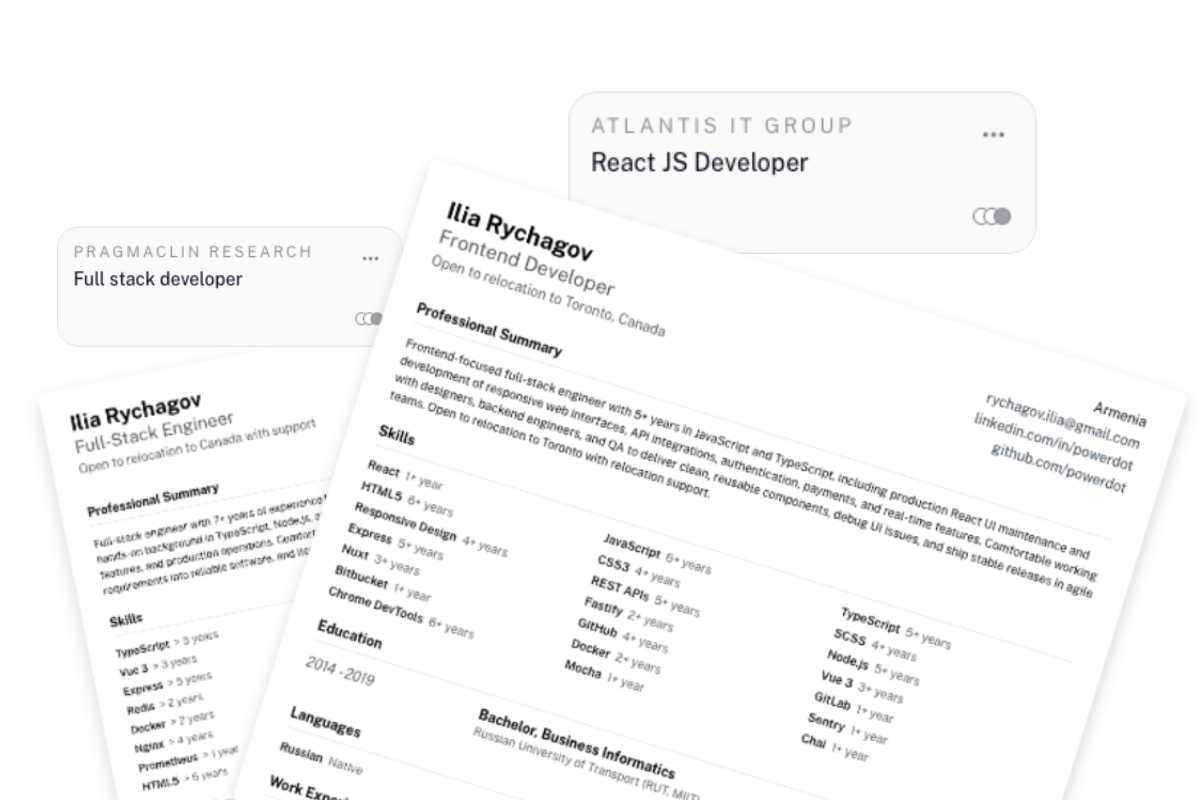
Every draft is grounded in the actual vacancy, so the resume speaks to the role instead of sounding like a generic rewrite.
Candidate context is built once and reused across future applications instead of being re-explained in every prompt.
The final PDF remains linked to the application, which matters later when recruiters reply weeks after you applied.
Workflow
These steps stay anchored to the same role and project context instead of being spread across unrelated tools and repeated prompts.
Use the role itself as the source of truth and avoid spending tailoring effort on weak-fit opportunities.
CareerBoard pulls from your real experience, preferences, and prior materials to emphasize the strongest match points for that role.
The document stays attached to the vacancy, which keeps follow-ups, prep, and future reviews aligned with what you actually sent.
Outcome
The value is not only the generated output. It is the continuity between earlier and later steps.
You submit resumes that sound intentionally matched to the job instead of lightly edited copies.
You stop juggling folders full of `resume-final-v7` style exports with unclear role history.
The same vacancy context can immediately power cover letters, interview prep, and application tracking.
Best fit
CareerBoard is strongest when the work around the output matters as much as the output itself.
Applicants sending multiple targeted applications and wanting each resume to feel role-specific without starting over every time.
People who need to remember exactly which resume version was sent to which company later in the process.
Job seekers who want tailoring to connect directly into cover letters, prep, and application tracking instead of living in a separate tool.
Questions
Short answers for what this use case page is and is not claiming.
Next pages
Move to another workflow, a comparison page, or a public integration page.